DUPLEX GRACIA – BARCELONA
Merging 2 Apartments into 1 Duplex in Gràcia
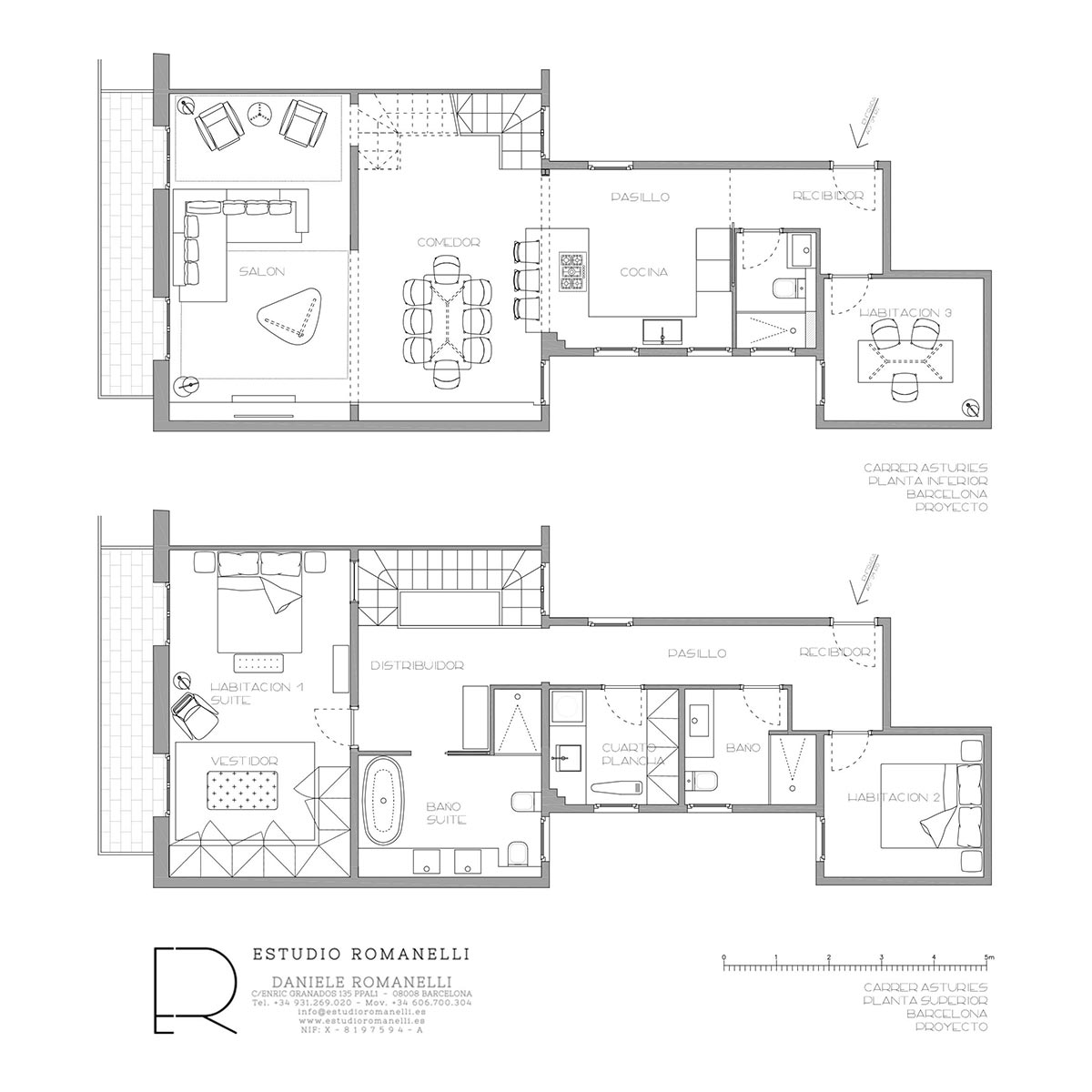
The initial idea of this project was to merge two apartments to create a duplex of approximately 150m2. Each original dwelling was arranged with a living room, dining room, kitchen, 2 bedrooms, and a bathroom.
The Initial Project
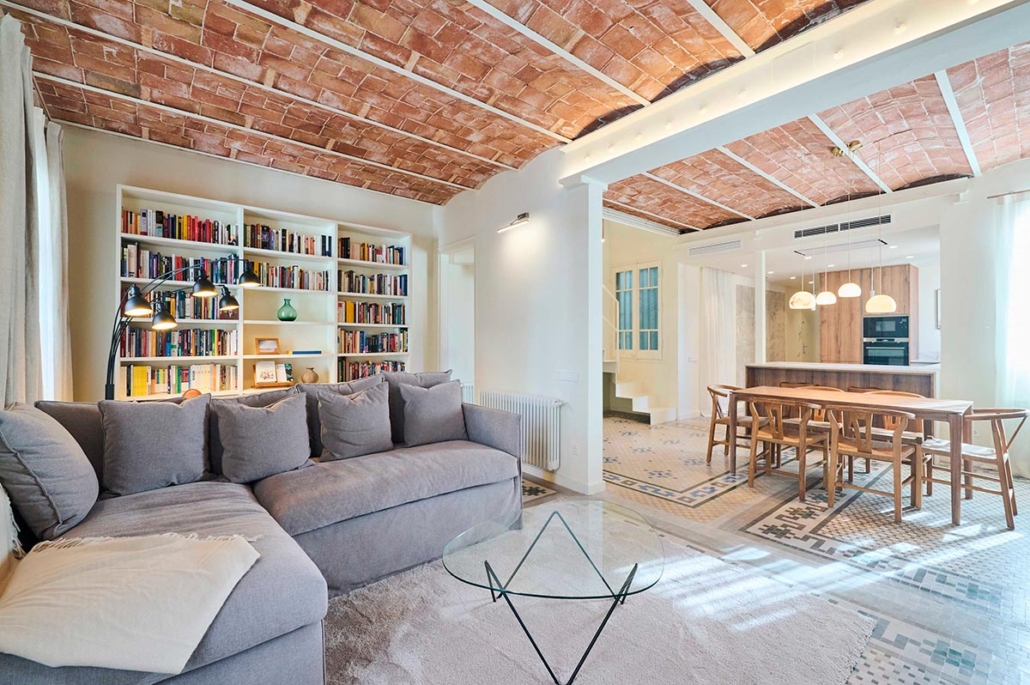
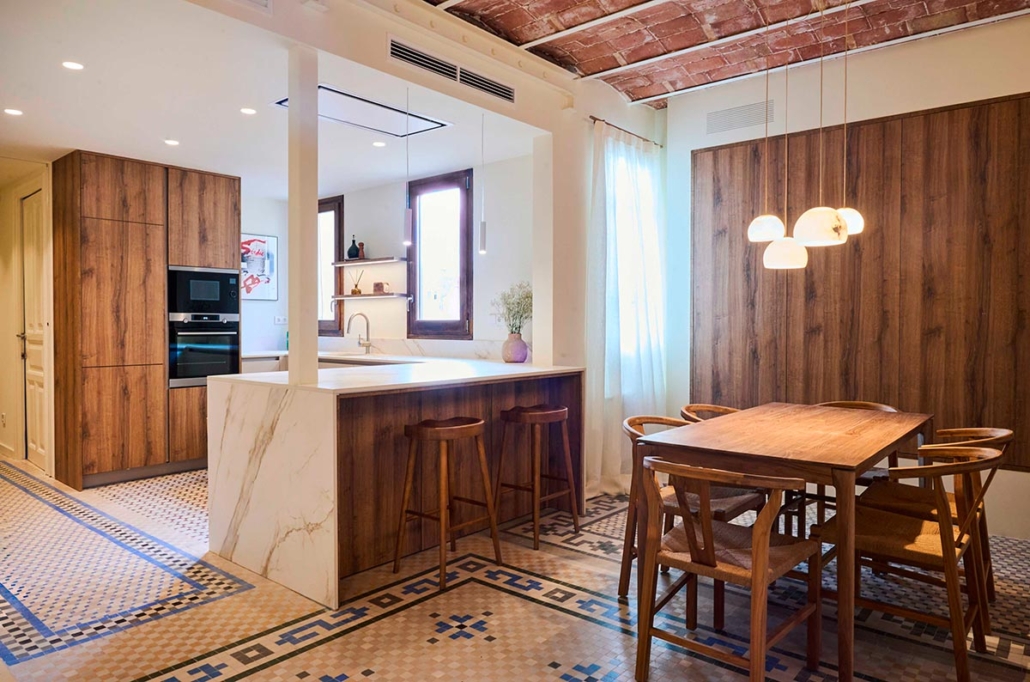
We have transformed the spaces, distinctly marking day and night areas. The lower floor has undergone the most changes in terms of distribution and structure, as we have demolished 2 load-bearing walls to create an open space that houses the living room, dining room, reading area, and kitchen. In addition, we have kept the existing bathroom and transformed a room into an office with a separate entrance.
Duration of the full renovation
The project was carried out in approximately four months, from the preliminary phases of the project to the completion and handover of the keys to the clients, going through the entire process of material selection and execution of the work.
At Romanelli interior design studio, we are dedicated to full renovation projects like this one, completely managed from design to execution of the work, studying in detail all the installations, lighting, custom furniture design, carpentry, and special finishes, all with the utmost professionalism that characterizes us.
The Duplex Renovation
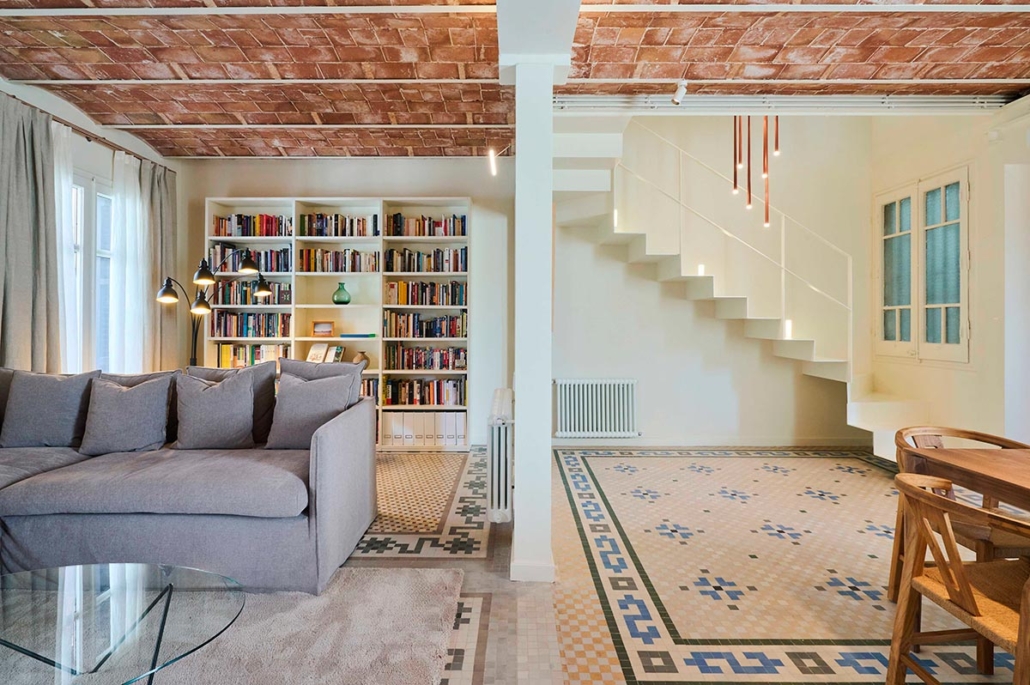
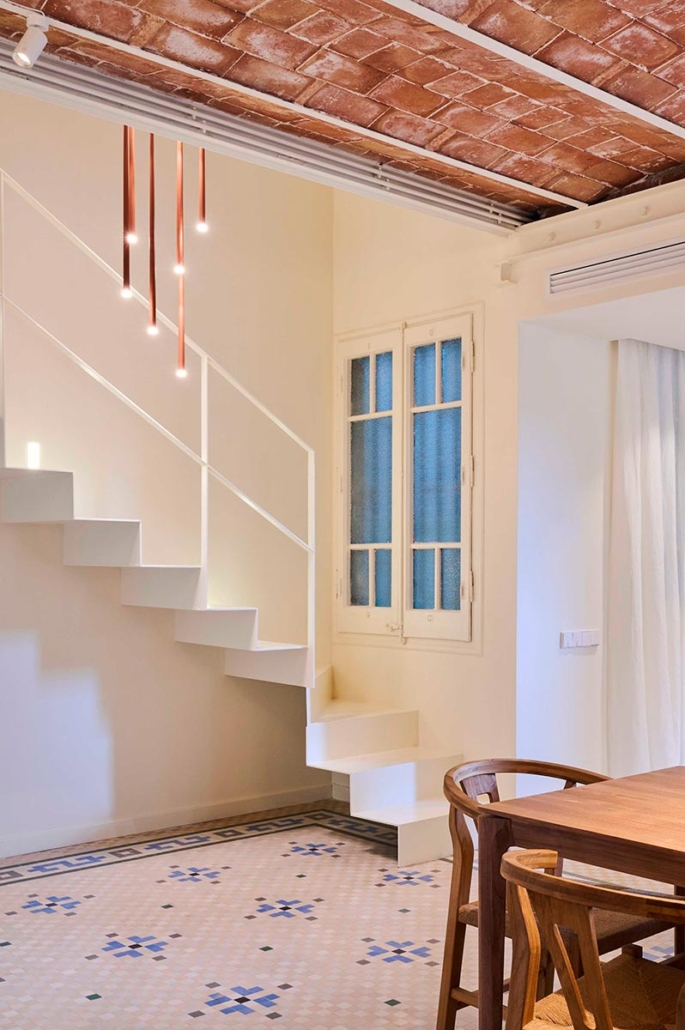
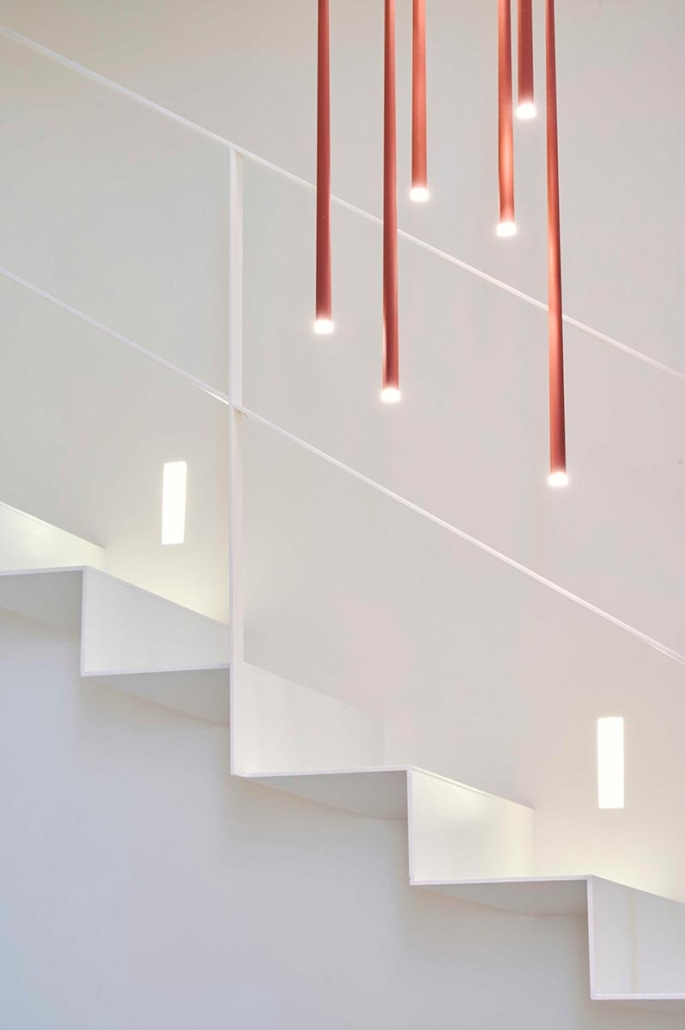
To create this duplex dwelling, we had to demolish part of the existing ceiling to install an internal staircase that connects the two floors. We designed a metal sheet staircase with a handrail painted the same color as the walls to make it as light as possible.
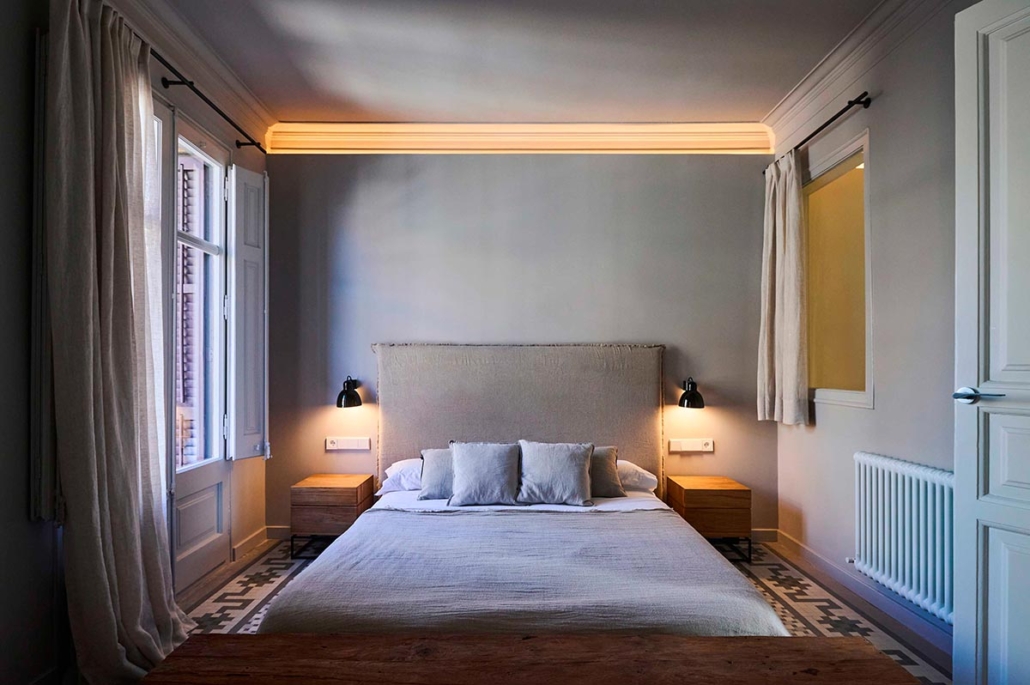
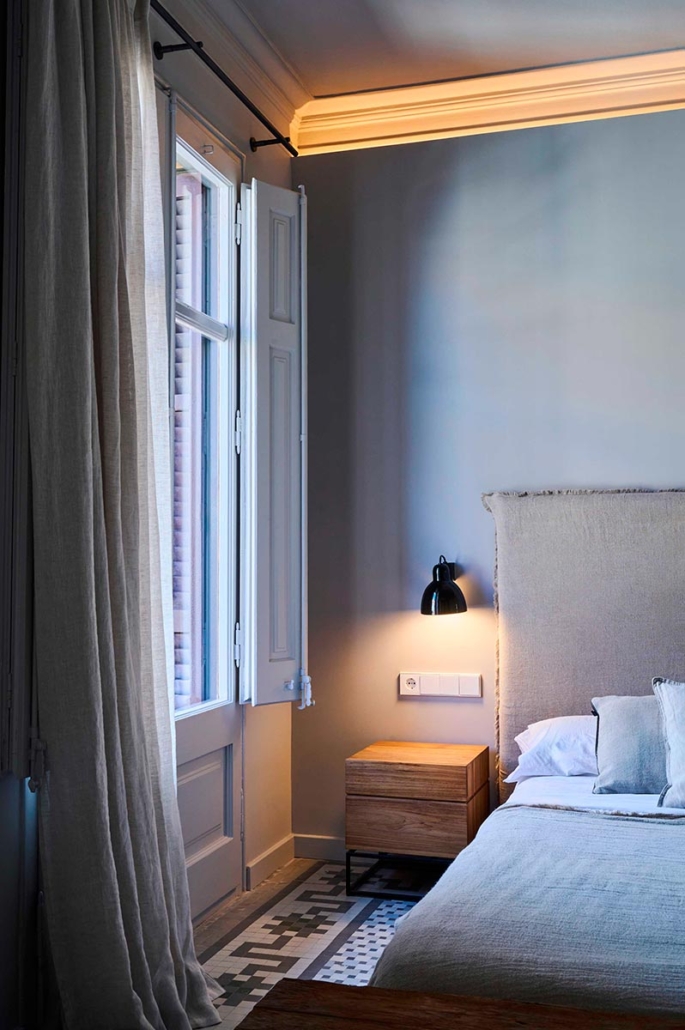
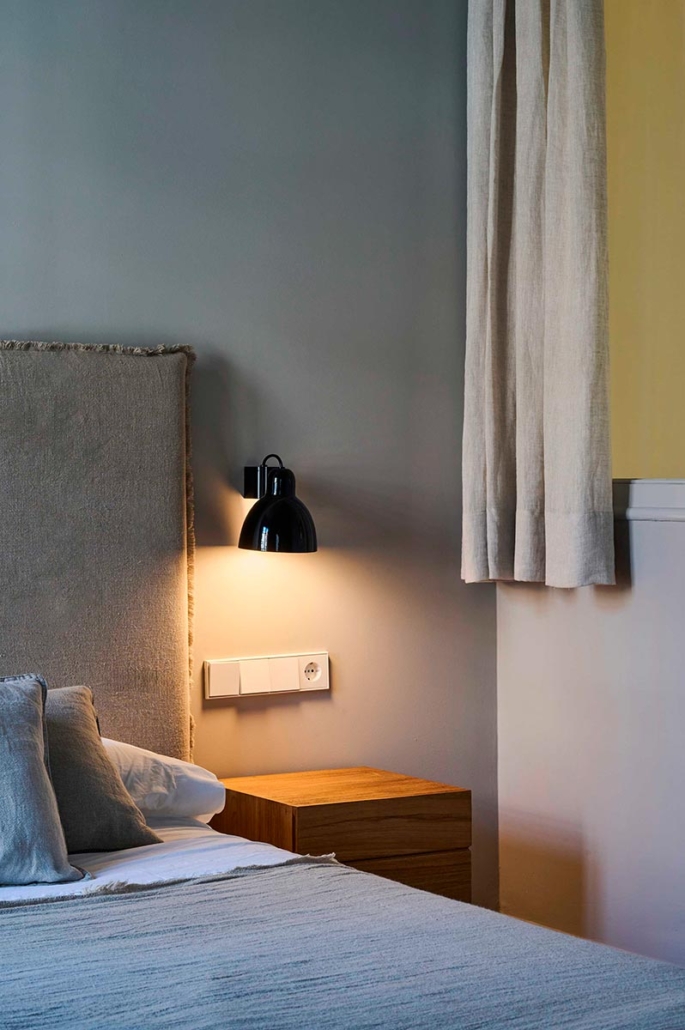
The upper floor, in contrast, has been converted into a night area, and we have arranged a large suite-type bedroom with a dressing room and private bathroom. On the same floor, we also have another bedroom with a bathroom and ironing room.
As with most of our projects, we try to preserve the original elements as much as possible, such as the carpentry of doors and windows, adjusting closures and mechanisms, and replacing the glass for greater interior comfort.
The “Nolla Mosaic” Flooring
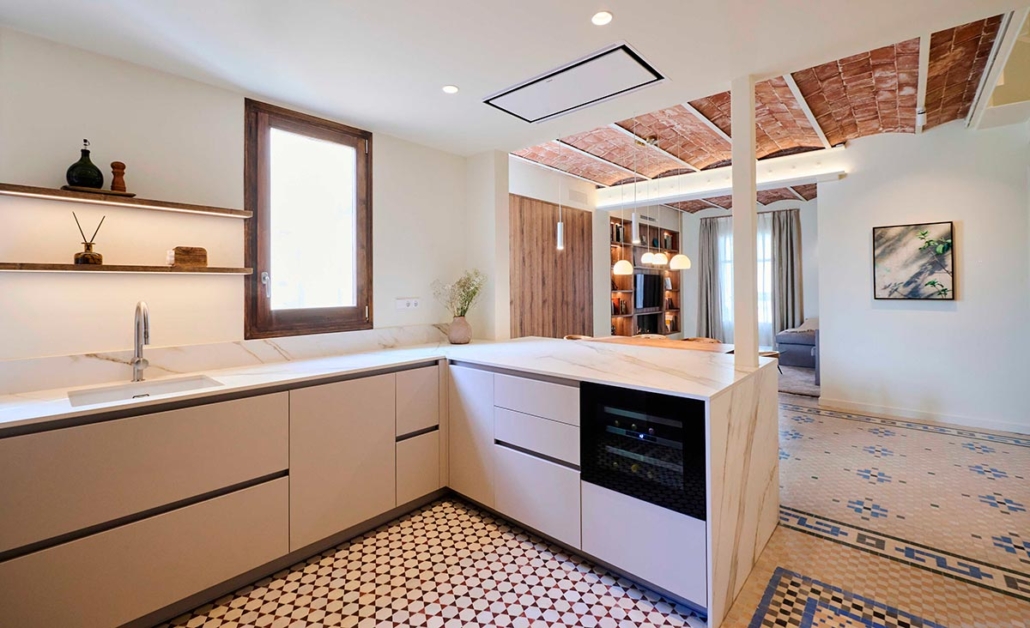
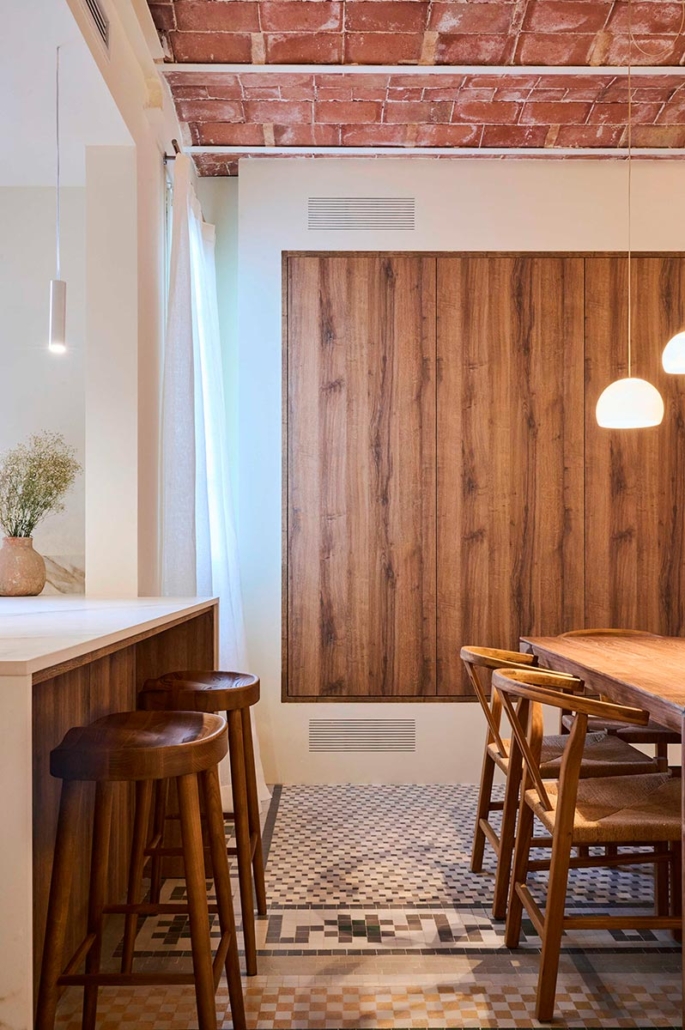
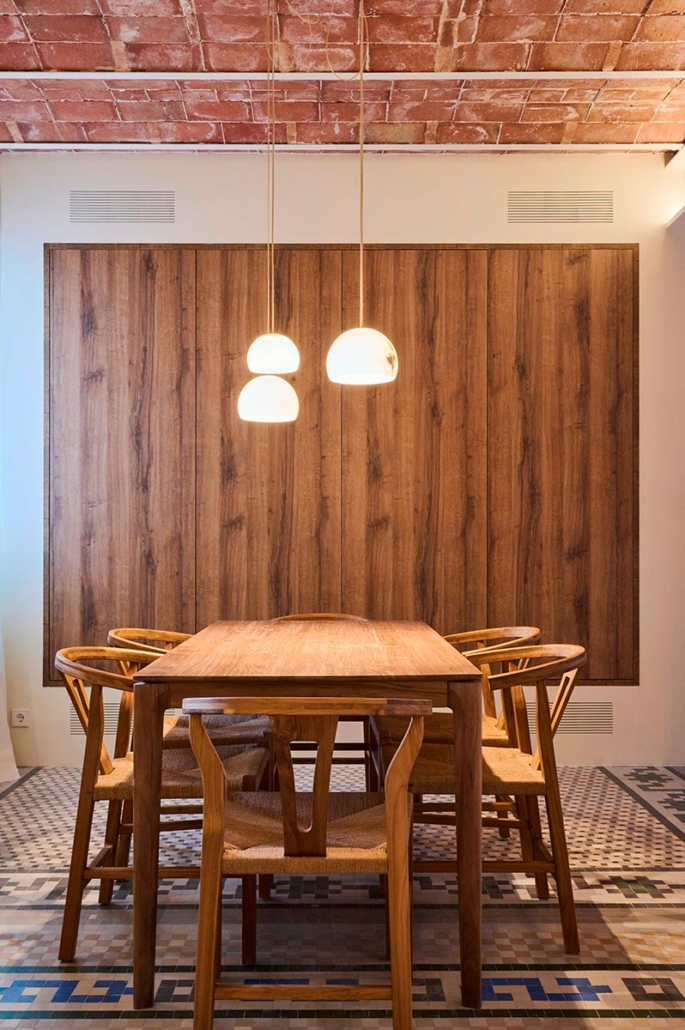
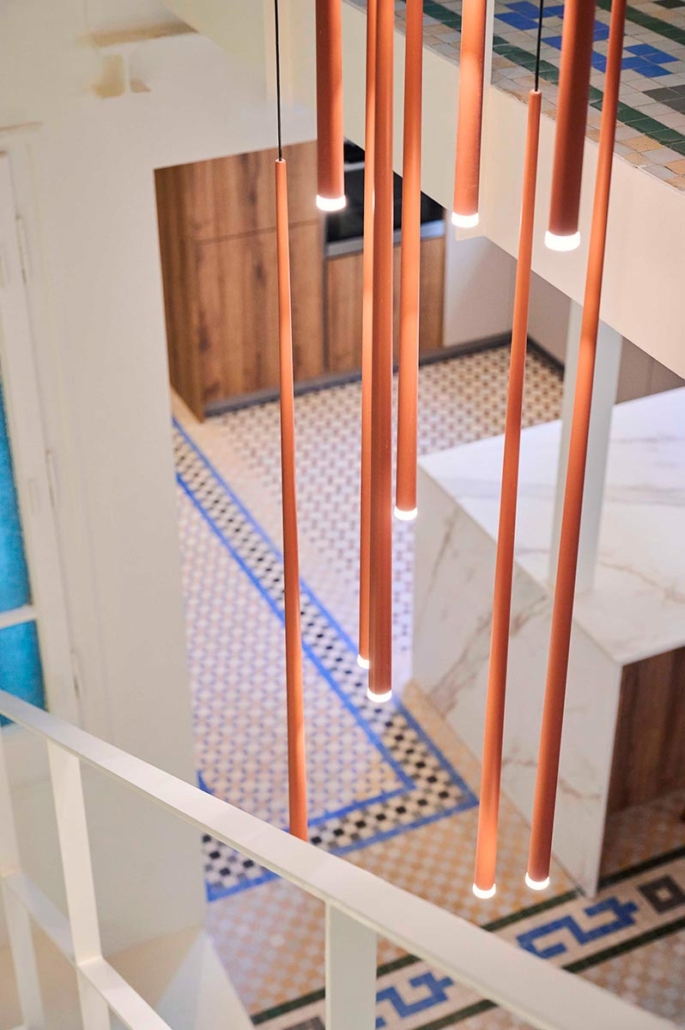
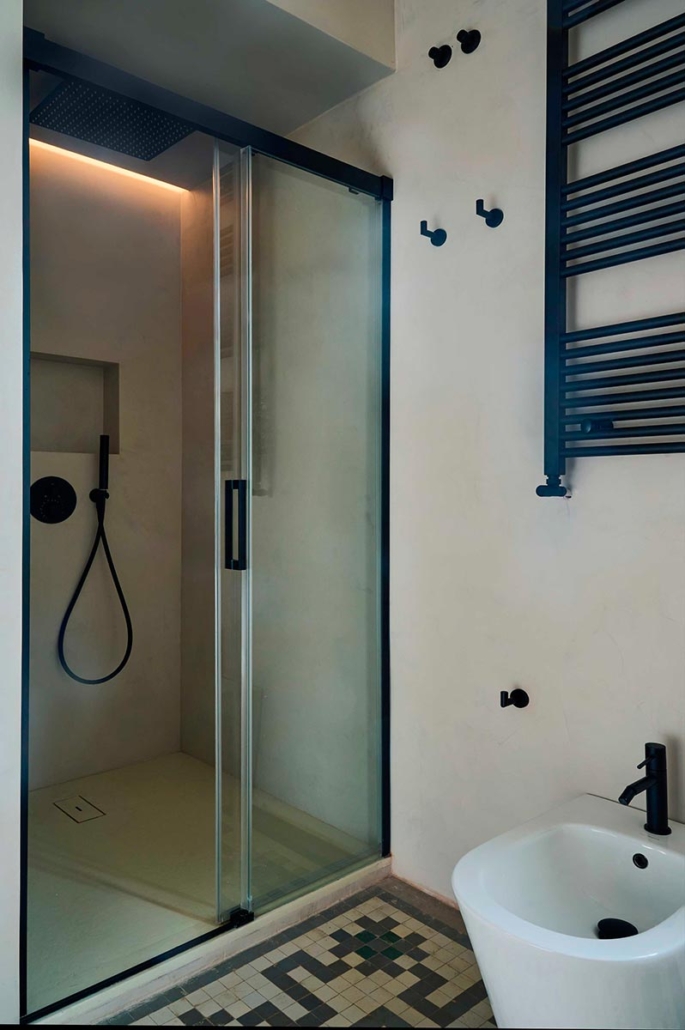
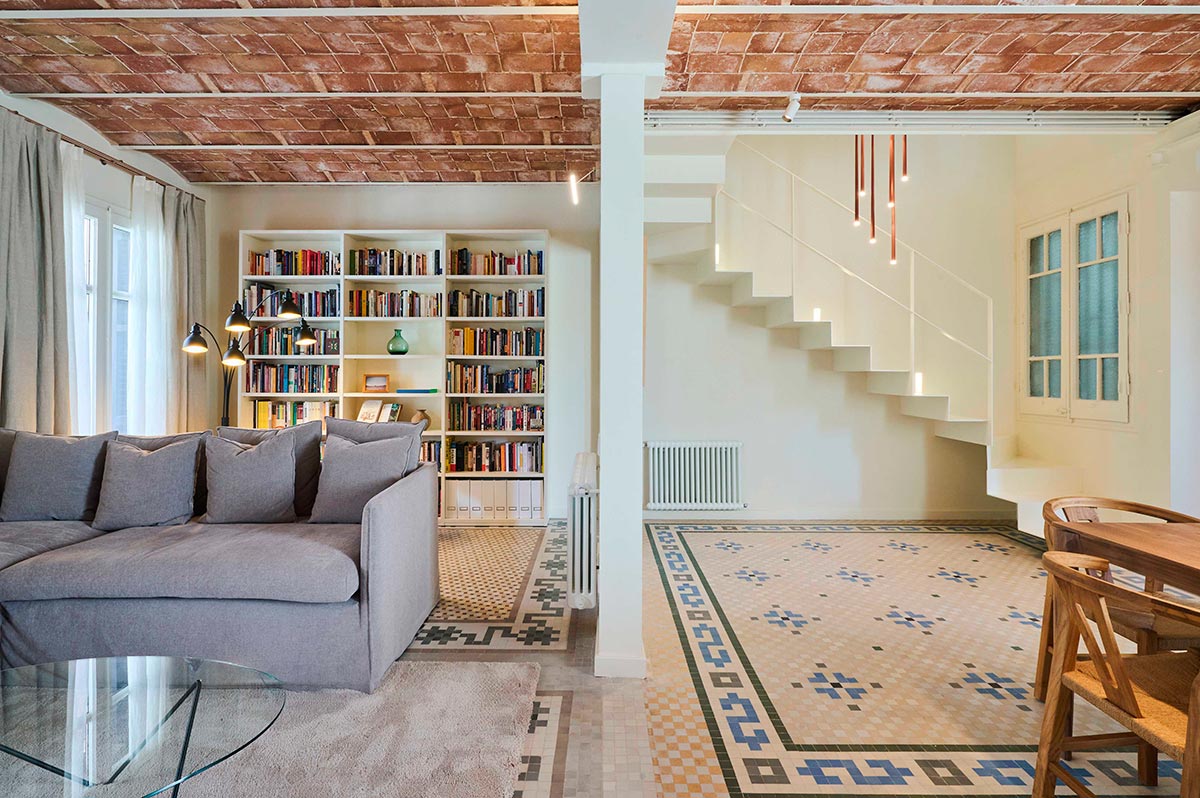
The most important element of this project is the spectacular Nolla-type mosaic flooring. It was clear from the beginning that it was essential to preserve and restore it. It has been a very elaborate job. We changed the floor distribution at various points, which forced us to recompose the mosaics in all these areas. Nearly 200 hours were dedicated to restoring worn or cracked areas and recomposing parts of the floor where we changed the distribution of the walls. Once the floor was reassembled, we had to apply grout to the entire surface, polish, diamond-finish and apply a series of products to make it shine and leave it impeccable.
Ceramic “Revoltón” Vaulted Ceilings
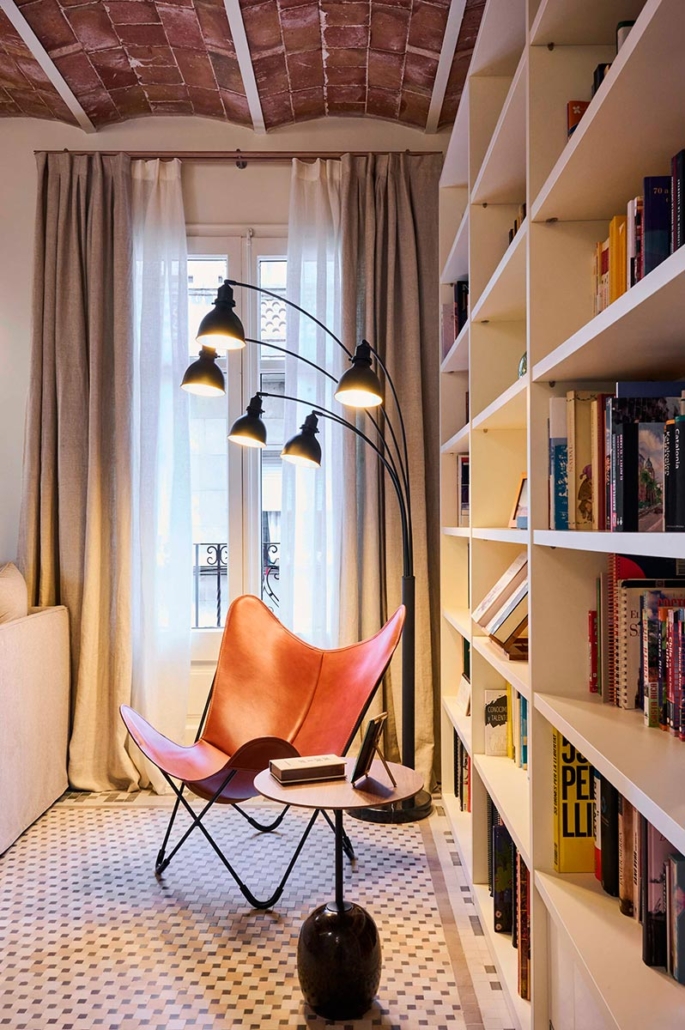
Another highlighted element is the original vaulted tiles, also known as “revoltón” ceilings, which we have discovered and manually restored in the living room area.
The Furniture
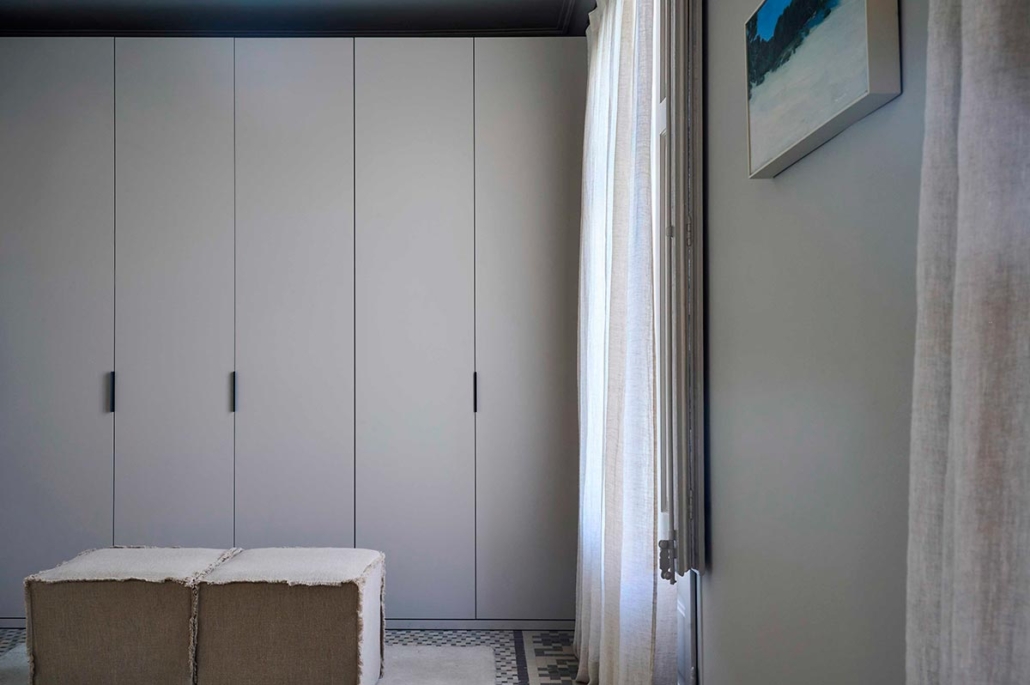
The furniture in the house is designed by our studio and custom-made. All rooms are fully furnished: bedroom wardrobes, dressing room, storage cabinets, and ironing room.
The Kitchen
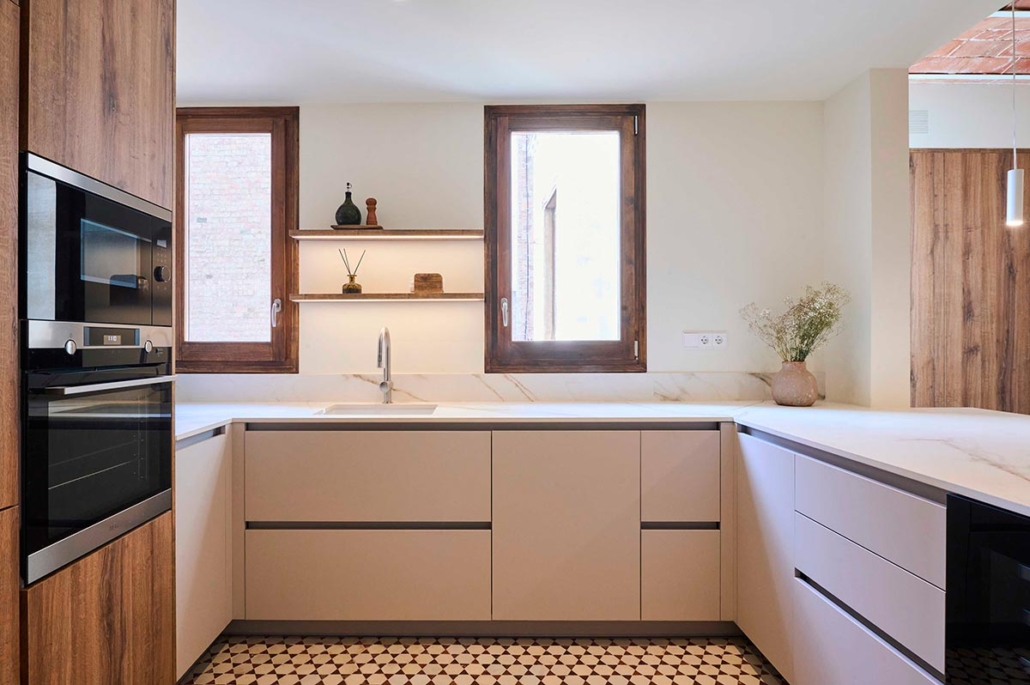
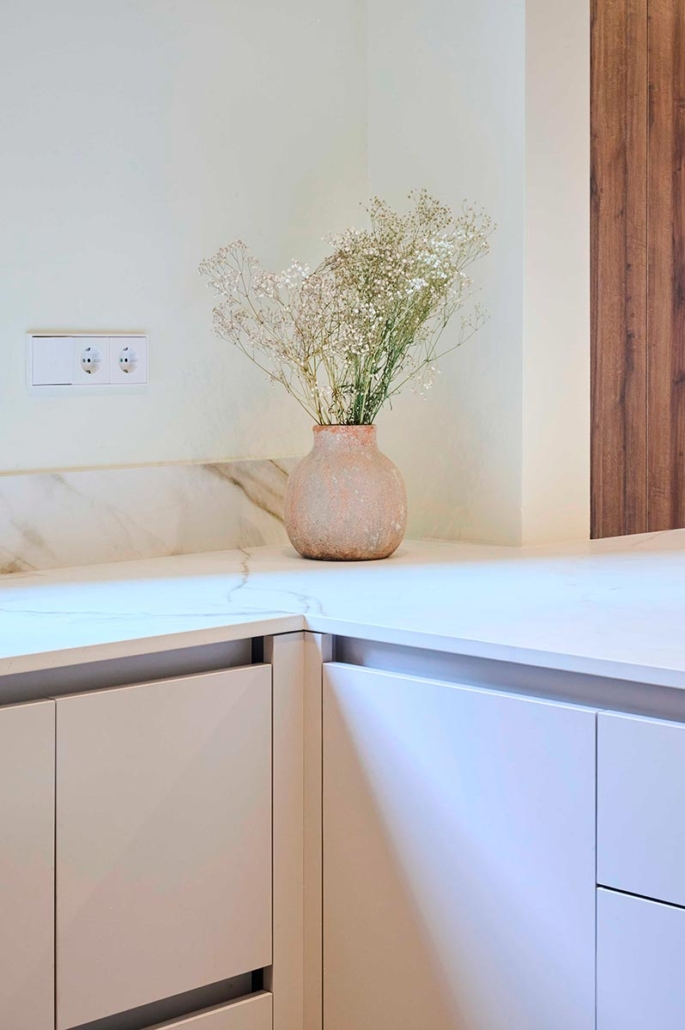
The kitchen is arranged to maximize space and considering that it is open to the living room, we have opted for integrated appliances as well as using a ceiling-mounted extractor hood and an invisible cooking hob placed under the marble-like Calacatta ceramic countertop.
The Living Room
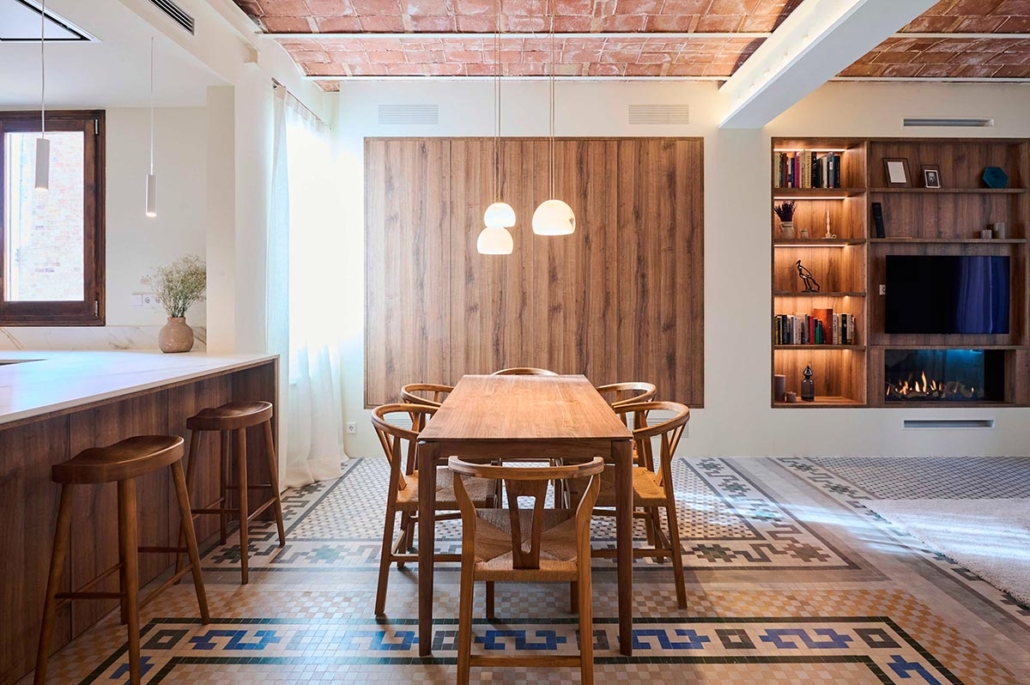
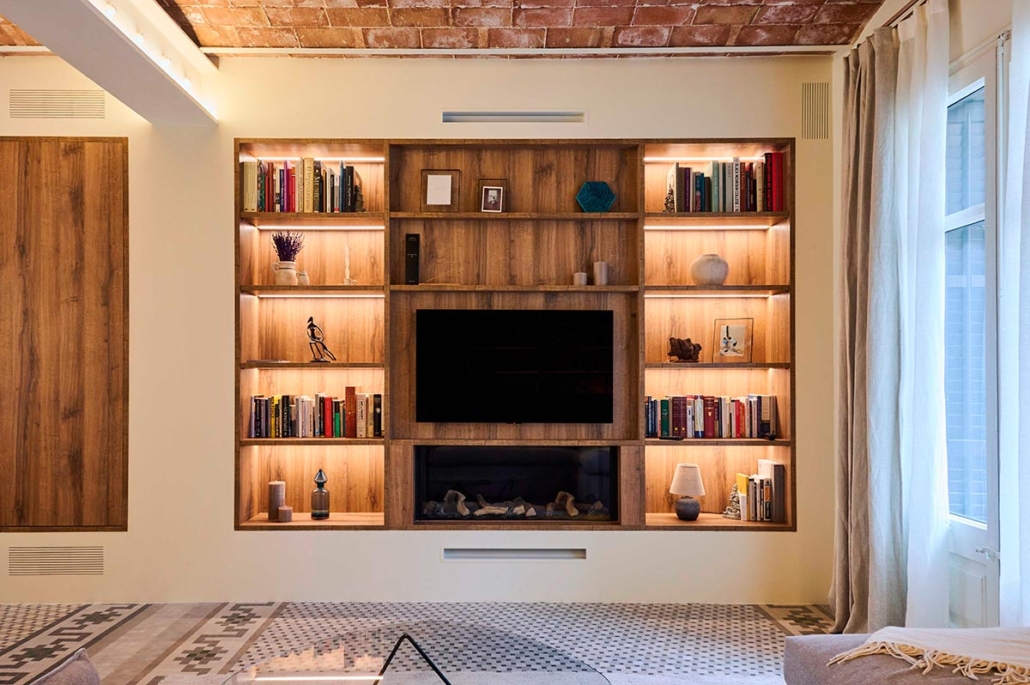
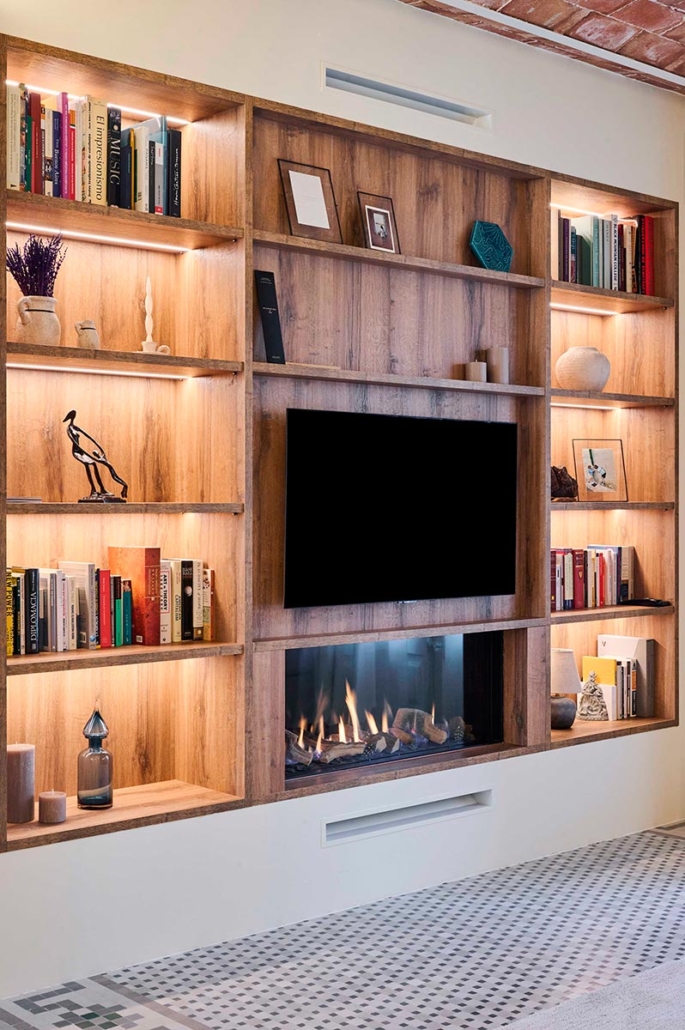
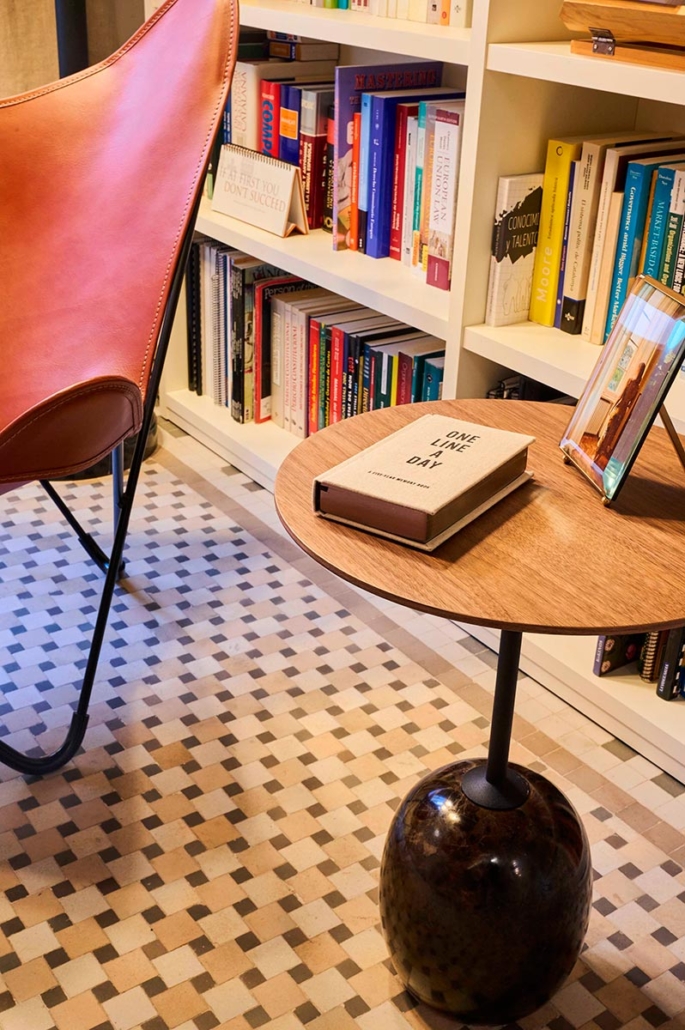
In the living room, we have designed a bookshelf that integrates a gas fireplace and TV. All shelves have indirect lighting. In addition, a series of 4 doors provide hidden storage behind them. In the same living room, we have also installed a bookcase along an entire wall with a reading area.
The Lounge
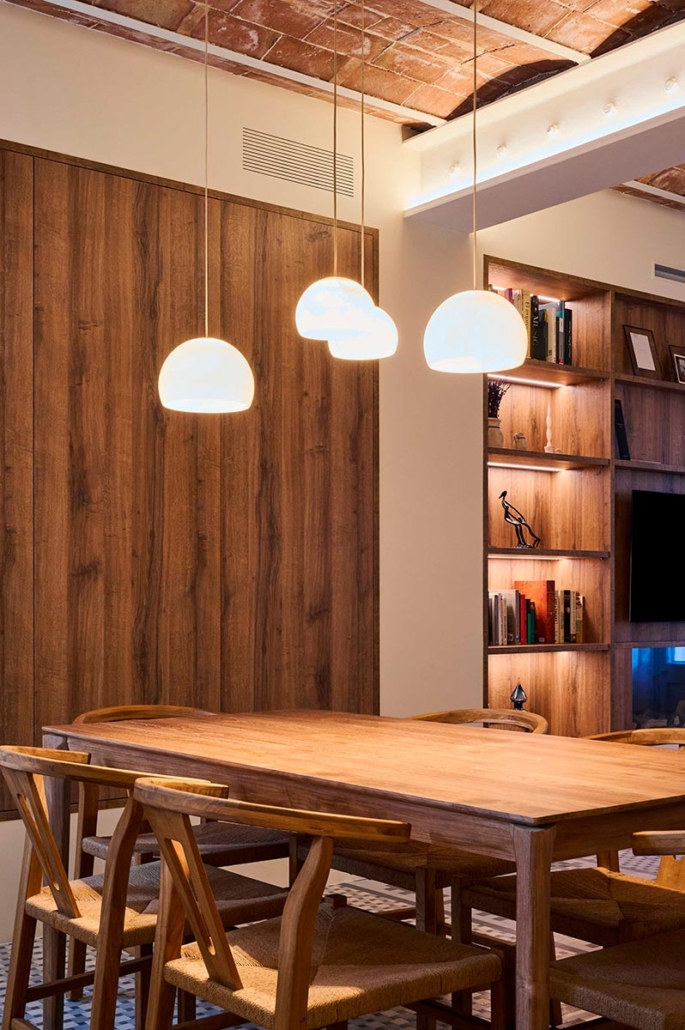
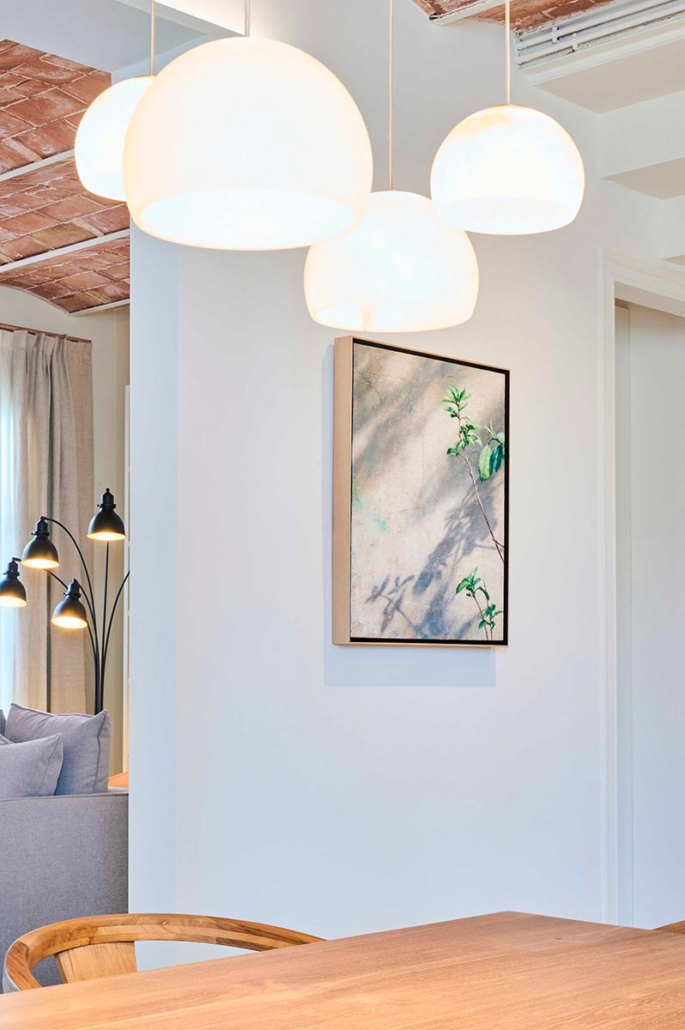
The lounge area is fully furnished with a sofa, dining table and chairs, armchairs, side tables, as well as curtains and paintings.
The Bathrooms
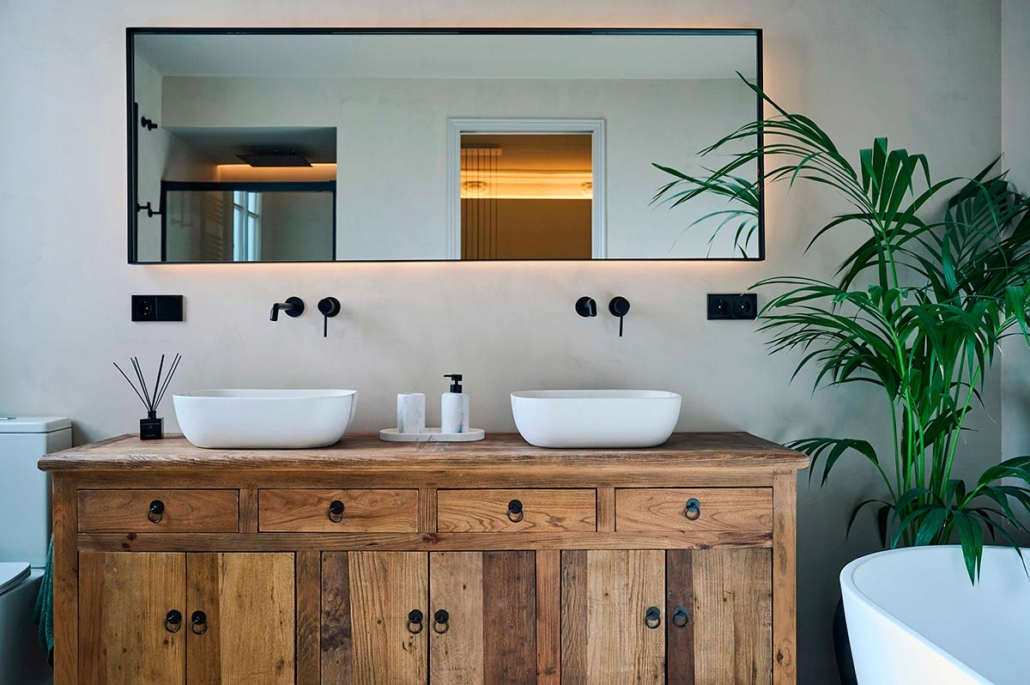
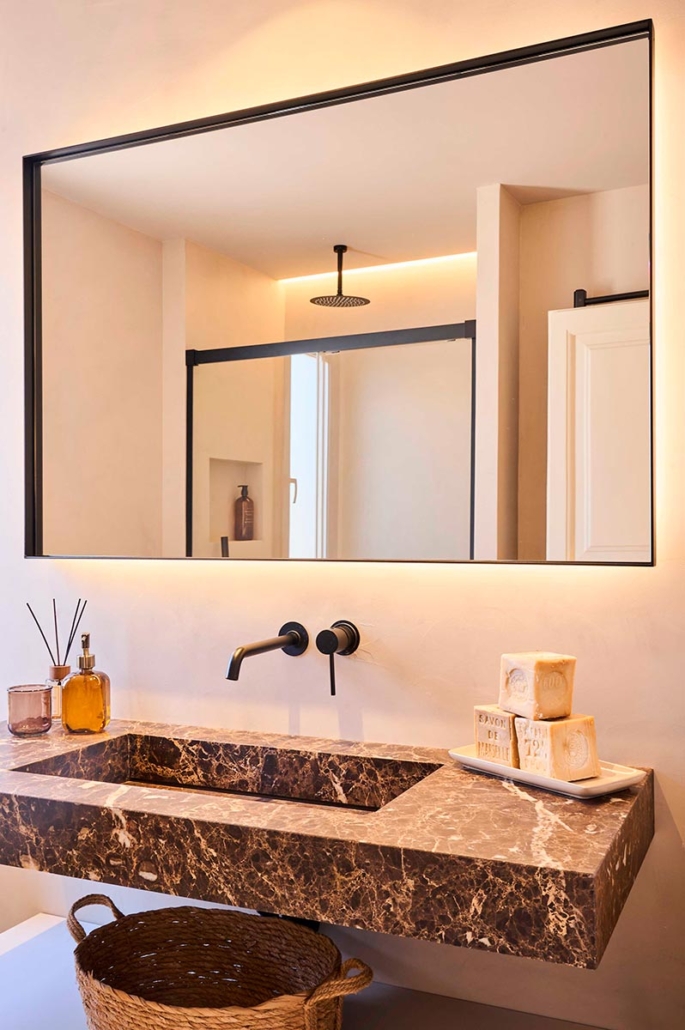
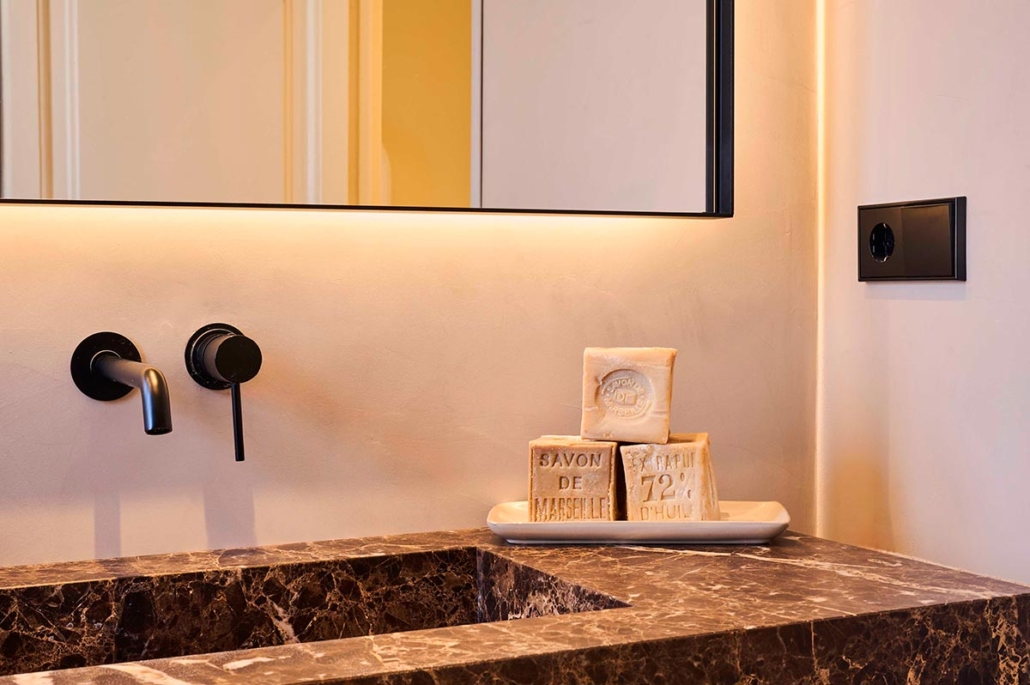
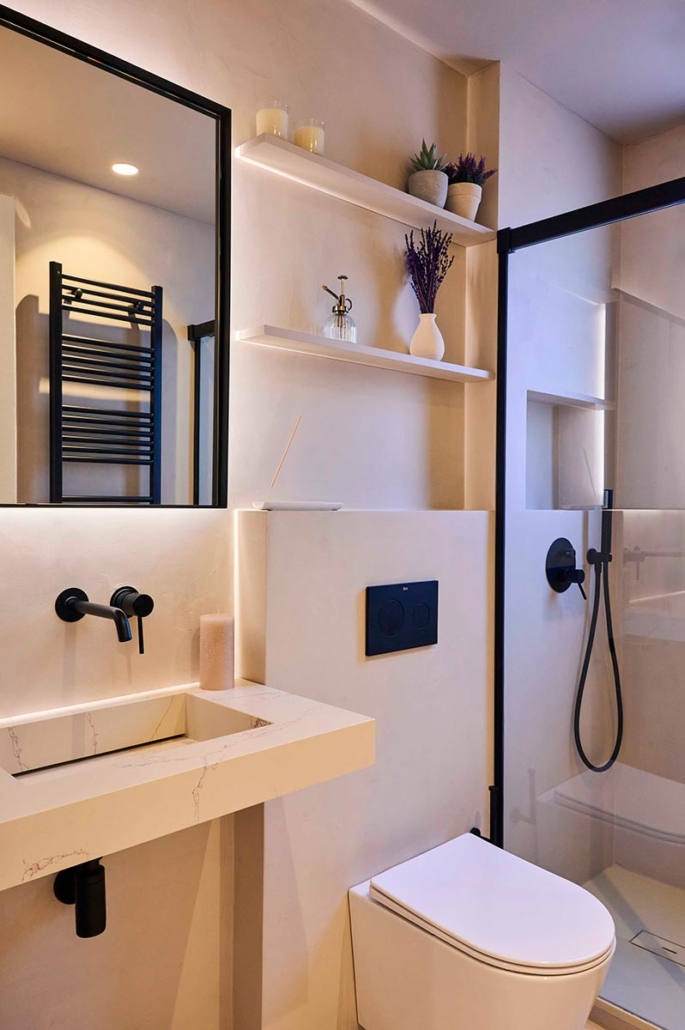
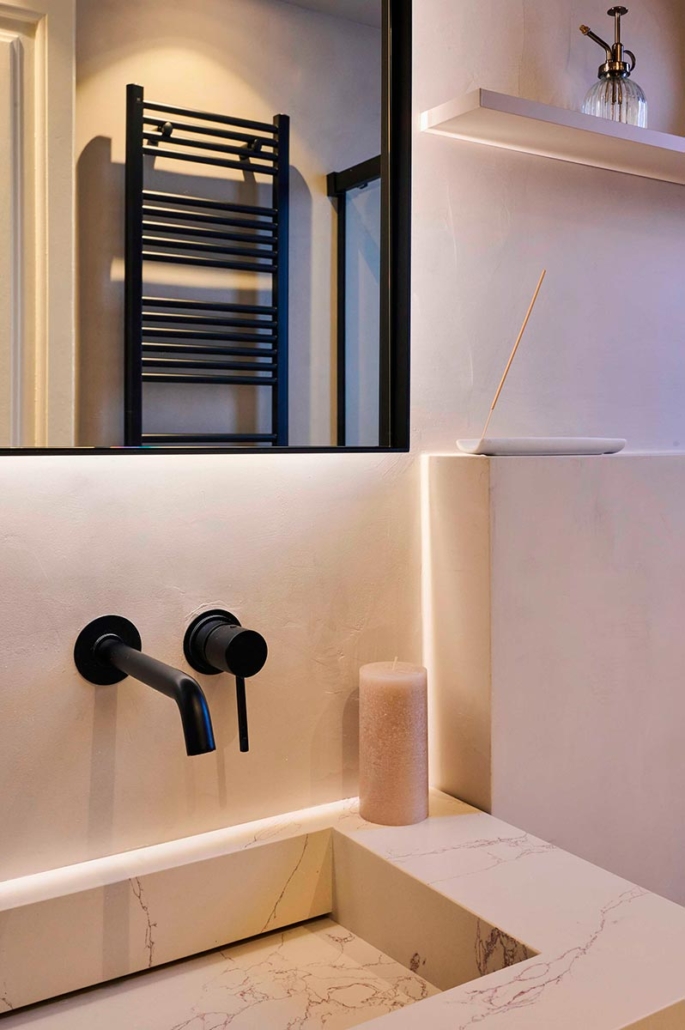
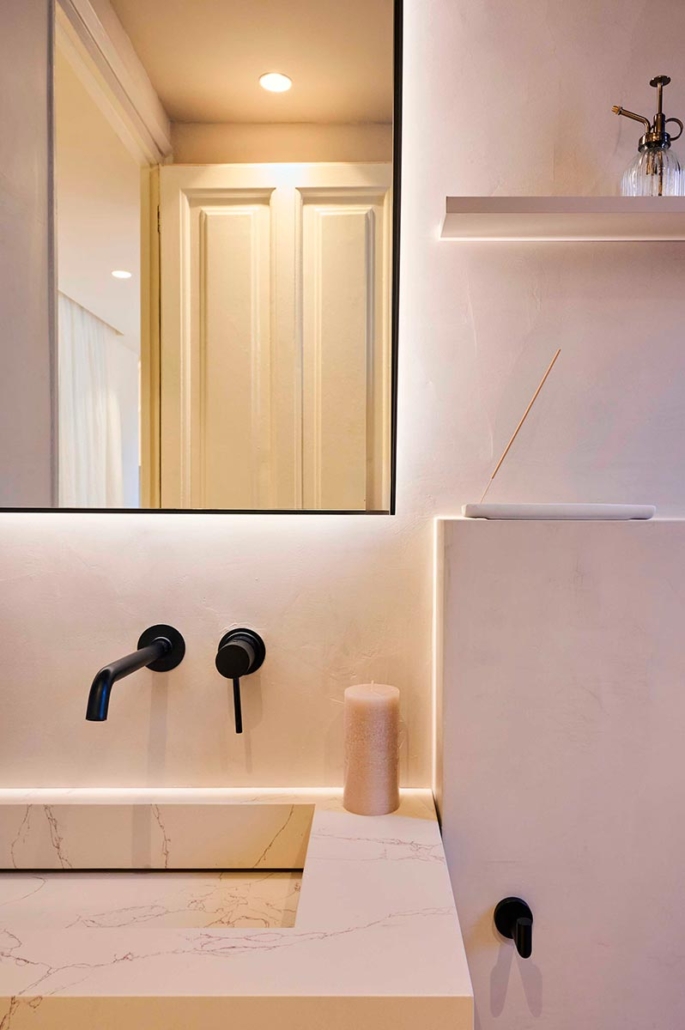
The bathrooms have walls and floors of microquartz (a type of microcement). The fixtures and accessories are matte black. In the main bathroom, we have kept the original mosaic floor and adapted an antique wooden furniture as a bathroom vanity on which we have placed two countertop basins and wall-mounted faucets.
The Lighting
Lighting also plays a very important role in this project. Apart from the technical lighting characterized by recessed spotlights in the false ceilings, we have placed several decorative lamps in almost every room.
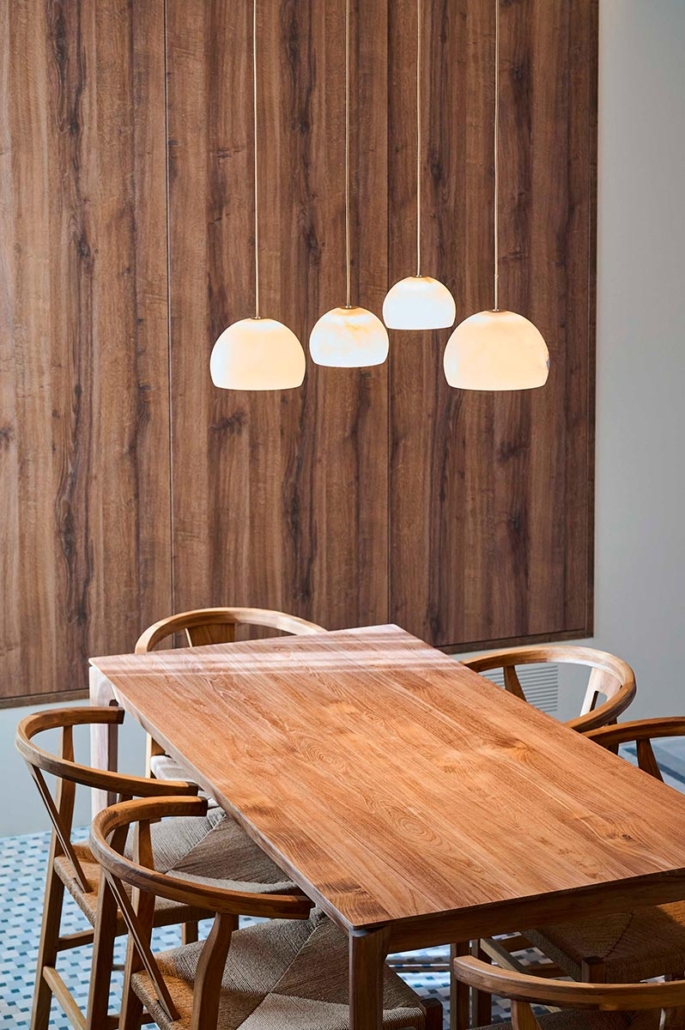
In the living room, we have placed 4 alabaster lamps above the dining table, and in the stairwell, we have installed a 4-meter lamp that hangs from the upper floor and illuminates the entire room.
We have installed indirect light strips on the ceilings of the bedrooms and in the stairwell. In the bathrooms, we have installed the same type of light inside the showers and have custom-made all the bathroom mirrors with indirect back lighting.
In the living room area, we have placed two light strips inside the reinforcement beams that we installed to demolish the load-bearing wall, thus illuminating and highlighting the original vaulted ceilings.
Brief history of the Nolla Mosaic
This type of mosaic originated in England in 1850, although in Spain it was Miguel Nolla who popularized it ten years later (1863) in Meliana (Valencia). It is the first high-performance ceramic produced in the country, made from small geometric gres ceramic tiles (usually 5x5cm or 10x10cm) to form complex mosaic compositions. Mass-produced geometric colored pieces (usually monochromatic, although some could include an embedded motif) were used to cover the entire floor surface.
In addition, the production system made the pieces always matte, so excess light was never a problem.
Although there were different manufacturers, Nolla was the first and also the most popular, which is why this type of flooring is known by his name.
These manufacturers had different mosaic designs in their catalogs, but also allowed greater freedom to customize according to the client’s or architect’s taste. With the emergence of hydraulic mosaic, it began to disappear as its installation and maintenance were more expensive.
Duration of the project + renovation
This intervention lasted approximately 6 months from the project phases through the execution of the work, furniture and decoration to the delivery of the keys to our clients.